
Showing posts with label PlayStation3. Show all posts

Sunday, January 30, 2011

Sony NGP announced, likely to lose to 3DS

Thursday saw the announcement of the successor to Sony’s PlayStation Portable, codenamed NGP or  ´Next Generation Portable´. Up until now, I was busy producing this report about all devices scheduled for 2011 (in German). As expected, the device will feature an OLED display and impressive hardware power. Apparently, porting PS3 games over to the new handheld will be a simple task and content does not have to be scaled down much. The only real innovation lies in the controls. Besides two analogue sticks and a directional pad, the NGP will feature a touch-sensitive panel on the back of the device. It also comes with built-in 3G for online gaming and downloads, although I have significant doubts whether 3G is fast and reliable enough for constant connections.

What is interesting is that Sony is developing a two-tier strategy in this field. Alongside the NGP, the company has announced the ´PlayStation Suite´, a new marketplace with less hardware hungry PlayStation titles, aimed at Android smartphones and tablets with a set of minimum specifications. Undoubtedly, the yet-to-be-announced ´Xperia Play´ by Sony Ericsson will be one of those devices. The underlying idea seems to be that ´PlayStation Suite´ will be the bait to get users to eventually buy an NGP for the full experience. The new marketplace is also expected to connect the Android devices with the NGP and the PlayStation3.

While it seems at first that Sony is employing a completely different philosophy to Nintendo here – pursuing perfection of existing technologies rather than innovation – there are also some similarities between the NGP and Nintendo’s 3DS, which will be available at the end of March in Europe and North America.

Both devices feature augmented reality games and social services. The NGP will offer ´Near´, which shows other owners in your vicinity, what they are playing and how far they have played. The service will also record your own movements. The 3DS will offer ´Streetpass´, which automatically connects to other devices near you to transfer data and virtual goods (similar to the tag mode in ´Animal Crossing: Wild World´ or ´Dragon Quest IX´). While some experts point out that such features are really only effective in Japan, where a large part of the population lives in densely populated areas, whereas they will be practically useless on other territories, the issue of data protection remains. These handhelds will require careful adjustments of the privacy settings, which will hopefully be in place, to make sure the owner actually wants to share his data.

I already asked the question whether the 3DS will hit markets too late and at too high a price. With the NGP officially announced for the holiday season 2011 and a delay until spring 2012 a likely move given Sony's track record, I no longer believe that the 3DS will come too late. The price of around $250/€250 remains painfully high, though. Especially given how the 3DS lacks the high class finish of the DSi XL or, indeed, the NGP. It will sell well regardless, but I would have preferred a price point of $200/€200 for consumers to buy the device without remorse.
Analysts expect the NGP to be even more expensive, at $300/€300 or above. Regardless of how well produced the device will feel, this will price Sony out of the market, for sure. I do not think that anyone who will play the odd casual PlayStation game on his Android device will want to invest that much into a dedicated gaming device. I certainly would not. It takes an innovative and unique feature like 3D to convince me to spend this type of amount and I will do so only grudgingly. Also, the NGP will encourage plenty of ports from the PlayStation3. So I expect a fair bit of cannibalisation between the new handheld and its home console sibling. While I expect ´PlayStation Suite´ to be a fairly successful service, the NGP is almost bound to fail and sell even less than its predecessor. The 3DS, albeit at a steep price, will sell extremely well, though. My guess is that Nintendo will sell more than 20 million units in 2011. The company expects to sell four million units in the first four weeks of availability in Japan with barely a week's availability in Europe and North America.

EDIT Codemasters CEO Rod Cousens has weighed in on the debate about the NGP price saying that "my hope is sub £200 (...) but I suspect something in the £229 - £249 [range] to be more likely." He continued that Sony had learnt "the lesson of over-engineered hardware" with regard to the original PSP. They have indeed and more obviously so with the PlayStation3. Back in 2006, they were losing up to $300 on each unit sold. Meanwhile, GameStop has posted an estimated price of $999,99 for the device, probably as a marketing trick, but taken the site down since then.

EDIT Now, Ubisoft's executive director of EMEA, Alain Corre, has gone on record to say that he expects an attractive price for the NGP: "I trust Sony to know their market very well and to be able to offer a price that will make their machine attractive. (...) If Sony can capture this huge market - and they do have a unique offer for that market with the NGP - then success will definitely be on the agenda for them."

I absolutely agree. As long as Sony manages to keep the price below €300 / $300, the device will sell successfully, I believe. But, comparing the 3DS and NGP, if you have to pay a premium for a machine that offers, albeit far more detailed, 2D graphics only, Sony will not be able to convince enough punters for the console to become a success.

Thursday, January 06, 2011

More details on 3DS, PSP phone


A rumour and a leak provide more details regarding both the Nintendo 3DS and Sony's yet unannounced PlayStation Portable Phone. Firstly, Spanish website Exponente Geek claims to have taken the following snapshot from the regional GameStop website, detailing an April 7th launch date for Europe at an expected price tag of €249.


The original webpage has since been taken down, it is claimed. The Google cache does not reveal the apparent content either.

Previously, a 3DS model had apparently been smuggled out of a factory for pictures and a video. Since there have been many events already, though, at which the console was presented to the world's media (albeit it could only be filmed from the side or switched off), the impact of this story has been overstated in my mind.

Engadget, meanwhile, has published new and surprisingly high-resolution images of the PlayStation Portable Phone, Sony has yet to announce. The images show both Sony Ericsson and Xperia logos, as well as the familiar PlayStation insignia.

EDIT In his CES keyote, Sony Computer Entertainment CEO Kaz Hirai hinted at other products besides the PSP Phone, as recorded by Joystiq.

Hirai teased that Sony's "strategy encompasses driving the development of a variety of new strategic products and services including tablets currently in development as well as smartphones, all the while of course integrating the know-how and the assets that we've accumulated from our PlayStation business."

What does that mean? It sounds like the PlayStation Phone is just part of the plan to leverage the PlayStation branding and games for Sony's other products. He continued, "In 2011, you will start to see an implementation of a strategy we've developed and continually refined over the past 18 months. And you will see this strategy executed in the form of great new products and services coming to market that leverage Sony's strongest assets. In addition to launching a line of Sony tablets, we'll be building upon the video, music, game and book offerings on our Qriocity and our PlayStation Network services to deliver a compelling, unique experience for Sony across a wide range of consumer electronic devices."


EDIT The matter regarding the PlayStation Phone is getting ridiculous now: a Chinese website has just published videos (via Engadget). I guess Sony is holding out until February 14th to reveal the device at the Mobile World Congress in Barcelona.

Friday, December 31, 2010

Looking ahead at 2011


Allow me to give you a brief glimpse of what 2011 will bring to this blog and videogames in general. ´Duke Nukem Forever´ will actually be released and kick off what will be a great year in gaming. The PlayStation phone will be announced. Soonafter, the 3DS will be launched and will undoubtedly sell like hotcakes, despite a hefty price tag of $249 and €249, respectively. Its success will convince the consumer electronics industry at large that autostereoscopic displays are the way forward. 2011 will definitely be a strong year for mobile gaming.

Do not expect any news about home consoles. No new consoles will be announced, for sure. Sony and Microsoft have just updated their hardware and will want to hedge their bets. What about these updates? I have always believed that Kinect will outsell Move because Move is too similar to the Wii controller. After playing with both long enough, I do not see Kinect games as having a lasting appeal, though. Give me ´Socom 4´ with Move any day. ´Kinect Adventures´ may be full of great and original ideas. But this type of game seems to be the only type available and the Wii cornered this market four years ago.

Almost every Kinect hack out there seems to have more appeal than the actual games. Of course, Microsoft will want to push Kinect in 2011 by churning out great software for it. But remember that they chose to drop an internal chip which leaves the actual console with the additional calculations. Analysts have not been sure whether this will affect performance in a noticable way, but this point may explain why we have not yet seen a ´Gears of War´ type game working with Kinect and, perhaps, never will. What commentators have been sure about is the additional lag the system is burdened with, as a result. And even leaving this point aside, I am still sceptical of the hardware (I am sceptical of any entertainment product that actually tells me to move my furniture before I start playing) because I simply have not had very satisfactory playing experiences in general.

Move already has a far more diverse portfolio and this should make Move sell far better than Kinect in 2011. But Move will not become a system seller for the console. Nintendo took a huge gamble by including motion controls in the console and, pretty much, forcing developers to incorporate it into all games. But by doing so, they did not fragment the user base further.

A PS3 or Xbox developer has to consider that the number of motion control interfaces sold for either platform is only a small fraction of each console's total hardware base. Why develop only for a few million potential customers when you could be developing for a few dozen - at less cost to boot? Kinect and Move will both sell in 2011 (with Move outselling Kinect, I believe) but both will never be truly successful. Neither hardware will play a significant role come 2012.

Nintendo will reduce the Wii's price tag in 2011 and be awarded by another and much needed sales spike. The 3DS will have some nifty ways of being hooked up to a Wii, I expect, and this interoperability will further help the home console's sales somewhat. I stand by my year-old prediction that the Wii will remain market leader this generation. PS3 and Xbox will outsell the Wii for much of 2011 (Nintendo will reduce the price in the late second half and then significantly, I believe) but they will not come close to the Wii's life-to-date sales.

What will 2011 bring to this blog? First of all, the year will start with a redesign and a new focus. I will publish everything from mammoth articles to short notices to reduce the wait and accomodate my increasingly hefty professional workload. And, of course, I will finally publish that Nibris article soon, which I believe will be very worthwhile. Like the one on Crossbeam Studios, I also expect this one to have swift and far-reaching consequences. The main reason for it still not being online is that hardly anyone wants to talk about Nibris. Even the founders do not want to talk about it, it seems. I have not yet received a reply to my interview questions via mail.

And, finally, what will 2011 hold in store for me? Well, I very much hope to be able to share some great and interesting news with you very soon, regarding my professional future. Last year, I already broadened my horizon significantly by co-hosting the European Innovative Games Award in Frankfurt. This year, I will be able to share a new and exciting project with you, if everything goes well. As 2010 ends, though, I would like to thank each and every one of you for continued support of this blog. I realise that updates have been far too rare of late but I promise you that 2011 will be different. Have a good one ushering in the new year. 2011 will be a blast.

Wednesday, October 27, 2010

PlayStation Portable phone leaked


The long-rumoured PlayStation Portable mobile phone has been confirmed via a leak published by Engadget (read their update).


Engadget is adamant that the photo really shows a prototype of what is soon to go into production. The product's codename is apparently ´Zeus´ and you may be surprised to hear that it is supposedly running Android.


As we reported back in August, the device you see is headed into the market soon, likely boasting Android 3.0 (aka Gingerbread), along with a custom Sony Marketplace which will allow you to purchase and download games designed for the new platform. The device snapped up top (and in our gallery below) is sporting a 1GHz Qualcomm MSM8655 (a chip similar to the one found in the G2, but 200MHz faster), 512MB of RAM, 1GB of ROM, and the screen is in the range of 3.7 to 4.1 inches. Looking almost identical to the mockup we hit you with this summer, the handset does indeed have a long touchpad in the center which is apparently multitouch, and you can see in the photos that it's still bearing those familiar PlayStation shoulder buttons. For Sony buffs, you'll be interested to know that there's no Memory Stick slot here, but there is support for microSD cards.

The particular model in these shots is still in prototyping mode. As such, the unit doesn't have a custom skin (not even SE's Timescape design seen on the Xperia devices), and is said to be rather buggy. We're digging into more facts as we speak, but it's likely that much of what we reported earlier is still accurate, and though the device could still be headed for a 2010 release, 2011 is looking much more realistic. Still, there's a lot of time between now and the holidays... so keep your fingers crossed!


I myself am rather surprised at the news, since Sony failed with their PSP Go, but the phone functionality may become for the PSP what 3D is sure to become for the DS.

EDIT CNET posits some interesting questions we should be asking ourselves regarding the PSP phone.

* Will this device be a PSP 2?

* Will PSP gaming be possible on other Android phones?

* Will it enable touch-screen gaming?

* Are there analog pads?

* When will it be released?

* What is the price?


Sources: Engadget, Engadget
Thanks to: Joystiq

Friday, March 26, 2010

Nintendo returns to 3D gaming


The 3DS

By now, you will have read most details about the Nintendo 3DS, Nintendo's return to 3D gaming after the failed Virtual Boy.

Since I am late to the party, reporting about this, I will concentrate on a few interesting details and aspects that have not been widely reported. First of all, the technology used is called a parallax barrier and will likely be provided by Sharp. You will find a pretty good description of this over on The Register.

Parallax barrier

I have used this tech before, in the form of a third party screen available for the iPhone. The results were very disappointing. However, a German exhibitor at this years's Game Developers Conference, which I attended, showed such a screen for a big monitor and the 3D visuals were pretty amazing. The only drawback was that you had to find a good position to perceive the effect from and stay put. In discussions over the last few days - including Nintendo employees - everyone agreed that Nintendo would only bring technology to market if it was perfected.

My chat with Miyamoto

Now, onto the timing. Some analysts suspect that Nintendo issued the news to prevent a news leak. Ironically, only days before the reveal, I was among a few lucky journalists who were able to interview Shigeru Miyamoto in London, ahead of his BAFTA award. And regarding a Wii successor, I asked him how Nintendo would try to innovate again, after being copied by both competitors. I suggested that 3D technology was the only route available. His answer was that while he could not talk about a Wii successor, I should wait for E3.

In fact, Miyamoto hyped E3 so much, that the official 3DS unveiling will most likely not be the main news at their press conference. There are a number of reasons. Of course, the timing and form of Nintendo's 3DS announcement appeared rushed. There are no images accompanying the news and the timing could cannibalise the launch of the DSi XL. But while most Nintendo employees I talk to were totally surprised about the hardware as well as the announcement, key people in all major territories knew that new hardware was coming. They may have been surprised at the 3D aspect. But they had been given advance warnings of such a revelation. In fact, a few have claimed that we can expect more. This must be why Nintendo blew the lid on the 3DS early. Because they will announce something far bigger at E3.

PlayStation Move update

Finally, just a quick note on PlayStation Move. My dear colleague Valentina posted a link on her blog (German) to the latest Engadget Show. In it (43:45 into the show), a number of videos illustrate the origin of PlayStation Move technology.

You may remember me writing about playing with early PlayStation Movbe tech back at the ECTS 2001. What you see in the video, labeled as 2004, is precisely what they publically showed three years prior to that. Lord knows why they do not give the correct date.

Thursday, March 11, 2010

PlayStation Move hands-on and more


Just a few hours ago, I was able to play at some length with Sony's PlayStation Move. The presentation was impressive. The hands-on session less so. I talked to some guys from Engadget and Joystiq and we were all in agreement that the lag was immense across all games. The Sony people at hand noted that it wasn't due to the Move hardware but due to the low framerate of the early demos. Most were pre-alpha versions. So the finished product should be much more responsive.

The range of games on display was pretty good. I played ´Socom 4´, ´Move Party´, ´The Shoot´ and a fighting simulation. ´Socom 4´ looked very good, while the one level I played of ´The Shoot´ was looking rather poor. All games displayed the lousy framerates mentioned above, though, and the high latency this entails.

I later interviewed Wedbush Securities analyst Michael Pachter who joked that he finally got the Wii HD he predicted, only that it wasn't manufactured by Nintendo. He was impressed, but didn't think it would necessarily be a system seller. The console is still $300 and the Move hardware bundle will cost another $100. He did note that it was time for Nintendo to act, though.

I also interviewed Westwood founder Louis Castle, who is now building an exciting new delivery platform called InstantAction and - amazingly - remembered me from our last interview years ago. His service allows games like ´Monkey Island´ or ´Assassin's Creed´ to be offered via social networks like Facebook. You click on the demo button and the game downloads onto your hard-drive amazingly fast. You can then embed the banner which launches the game to your blog or any other site. It seems like a great idea and works a treat.

And I was also able to speak to Steve Perlman, CEO of OnLive. He showed an iPhone running Crysis and it looked pretty much unbelievable. We have a street date and a price (June 17th, $14,95 a month), so the critics who cried vapourware were silenced. That's it for now. Tommorrow we will interview Peter Molyneux and Sid Meier the day after. Stay tuned for more impressions from GDC.

Saturday, February 20, 2010

The future of games


At the D.I.C.E. Summit, which closed yesterday, Jesse Schell held an interesting talk on the future of gaming. Schell is CEO of Schell Games and tutor at the faculty of the Entertainment Technology Center at Carnegie Mellon University. He also used to work for Disney and still acts as a consultant for them.

His presentation entitled ´Design Outside The Box´ examines recent phenomena in gaming and their impact, as well as the future, where mundane tasks may come in the form of videogames.

I would like to introduce his presentation as follows. Consider a single game that is currently played by more than 70 million active users. Sounds impossible? No, there really is a game like that. But they must have collected this user base over many, many years, right? No, they only started out in June, so that is barely more than half a year.

That game in question, arguably the most successful game in the world at this point, is FarmVille on Facebook. Developer Zynga Game Network has attracted some big talent from traditional game companies. Its Vice President of Game Development should sound familiar: Mike Verdu recently left Electronic Arts, where he was General Manager at EALA and responsible for the ´Command & Conquer´ series.

What's more, Richard Garriott, better known as Lord British (´Ultima´, ´Tabula Rasa´), has just announced he is moving into social gaming and will be using Facebook as a platform with his new company Portalarium.

I myself have argued many times on this blog that the epicentre of gaming has already shifted with Wii. A core player is no longer one fond of gory horror and action shooters, but of ´Wii Fit´ and ´Brain Training´. Those games now constitute the core of gaming - which is a simple question of numbers. And now, Facebook is fast becoming the core of gaming. How will that change gaming? Where will gaming head in the future? Let Jesse Schell tell you.


Source: G4TV
Thanks to: Bitmob

Thursday, February 18, 2010

´Heavy Rain´ to turn the tide for PS3


The PlayStation3 exclusive ´Heavy Rain´ is likely to turn the tide for the console, which has been trailing its competitors up until now. The installed hardware base is now within close range of the Xbox360 and – if buyers perceive a better line-up of games – could be set to overtake it this year. The current tally is as follows:

Wii: 67.45 million
Xbox360: 39 million
PlayStation3: 33.71 million

I believe that, given the recent surge in sales, Sony CEO Howard Stringer is confident that the PlayStation branch can soon turn a profit. I no longer believe that Sony is considering leaving the home console business, although that possibility was certainly discussed by Sony executives over the last years. For a final judgement, of course, we will have to wait for the introduction of ´Project Natal´ and ´Sphere´. How the public perceives these new motion control technologies will determine the fate of both the PS3 and Xbox360.

´Heavy Rain´ – a videogaming milestone

As far as ´Heavy Rain´ is concerned, I can assure you that it is a milestone of videogaming and, if marketed effectively, can certainly help to turn the tide for the PlayStation3. It is a thriller with an extremely dense and dark atmosphere, developed by Quantic Dream (´Fahrenheit´, aka ´Indigo Prophecy´). It draws from movies like ´Blade Runner´, but also ´Saw´. As a game, it is highly reminiscent of ´Shenmue´, since it involves players in cut-scenes via quick time events and does not follow the usual pacing of action titles. Instead, the player is invited to take his time and has to engage in mundane tasks, such as cooking lunch, taking a shower or minding kids and infants. As in ´Shenmue´, the game offers an unusually slow but rewarding pacing. The mundane tasks serve to identify with the characters and to only heighten the action which invariably follows.

What greatly sets it apart from ´Shenmue´ is that the game always continues, even if you miss all the quick time events. Your current character (out of a total of four playable ones) may die or another character may die as a result of your failure. But the game will continue, missing out chapters that would have contained those characters, and bringing the story to a conclusion, albeit a grim one. The story, it is claimed, will always make sense, no matter how it plays out individually. And, of course, the choices are sometimes drastic and not easy. Would you go as far as to harm yourself in order to save your child’s life?

As such, ´Heavy Rain´ is taking a number of big risks. If you only play through it once, you will only see a fraction of the entire game. Also, the player is bound to feel frustration and regret, since you cannot easily restart the game when you failed in a specific task. Ideally, the game should be played through without any cheating. For some, frustration may simply put them off. But the majority, I believe, will simply itch to play the game again, right after finishing it for the first time. ´Heavy Rain´ certainly has the highest replay value of any such game I have ever seen.

Emotionally engaging, astounding graphics

And, I can assure you, it is a very emotional game. The plight of a father who wants to save his remaining son from a serial killer is extremely well communicated and the mundane tasks aid this greatly. Playing with a withdrawn and depressed child and eventually making him laugh is utterly rewarding and emotionally engaging. This effectively raises the stakes for you performing well. Failure will result in some feelings of guilt.

The graphics are nothing short of astounding. I attended the game’s premiere in Paris and meeting the actors was an eerie experience, because some of them looked exactly like their digital counterparts. In fact, I would argue, the game is so much closer to photorealism than any other game that you inevitably realize just how far we still have to go to achieve full photorealism. Real facial expressions are extremely subtle, based on dozens and dozens of intricate muscles. In ´Heavy Rain´, the range of emotional expressions is still limited and so the acting comes across as a little woody. But this is by far the best effort in this regard ever. It is leaps and bounds ahead of any other game and probably will remain so for some years to come.

Forgivable flaws

The game is not without its flaws, of course. Since the camera will change automatically, to give you that cinematic experience, the controls are compromised. You start off in one direction, but if the game cuts to an opposing camera angle, you will end up pointing the analogue stick straight back while continuing to walk forward. There is a small latency built in, so you don’t mess up when correcting your path. But it is a little awkward nonetheless.

Also, the frame rate ranges from excellent to abysmal, especially when surrounded by around one hundred people. But these slight technical issues appear irrelevant, given the most rewarding experience that ´Heavy Rain´ offers. An admissible criticism is the fact that the player’s freedom is an illusion, to some extent. Not all quick time events have wide-ranging consequences. You cannot, for example, save the main character’s first son from being killed in a car accident in the very beginning, no matter how well you keep up with him. So ´Heavy Rain´ also shows the limits of a non-linear videogame. But with more than two dozen different endings, this is as good as it gets.

There are some minor features worth noting. Innovatively, it allows the player to show the current character’s thoughts via what looks like a tag cloud. The same system is used for conversations. If the character is irate, the tag cloud will shake and make your choice more difficult.

Launch Event

At the Paris launch event, legendary director Terry Gilliam headed a group of movie professionals which discussed the game. Speaking to Gilliam, he found much praise for ´Heavy Rain´ and, after a screening of the first hour, noted many scenes that played out differently when he had played it. I wondered whether the rich artistic visions he brought to the silver screen, such as ´Brazil´, could ever be realized in a videogame and acknowledged the intrinsic contradiction between a linear story and an interactive medium. But Gilliam was genuinely convinced that videogames had great potential as a storytelling tool and that ´Heavy Rain´ illustrated that potential well. Speaking to David Cage, he was flattered by me calling the game a milestone. He downplayed the comparison with ´Shenmue´, though, telling me that he never played it, which is striking, given the parallels. The event on the whole was impressive, if only for the presence of such a talented movie director as Terry Gilliam.

Experience it yourself

Finally, I urge every one of you to play this game and experience it for yourself. It could easily become a system-seller for the console. Needless to say, it will be bundled with the hardware. Let us see whether ´Heavy Rain´ can truly turn the tide for the PlayStation3. On Friday, I get a close look at ´Alan Wake´. Stay tuned to find out how these games compare and measure up.

EDIT I have to slightly reevaluate the game after playing it a second time. My assertion that "if you only play through it once, you will only see a fraction of the entire game" was wrong. It turns out that only very few key scenes can have potential consequences at all. Very often, missing QTEs causes the game to wait for you until you get it right, like ´Shenmue´.

Here are some examples (from earlier chapters to minimize the spoiler effect). When the detective needs to reach for his inhaler, you have no time limit at all. You can safely leave the game for an hour and come back and he will still be waiting for you. Him collapsing without the medicine and the story taking a different turn has not been implemented.

In Ethan's dream-like sequence in the station, you have an unlimited number of attempts to focus on the task of getting through the crowd. Again, you cannot fail. Worse still, later in the game you need to steer the detective's car while an upset passenger is trying to steer it in the opposite direction. Getting everything right yields the same result as missing every single one. You will be able to see this in my review when it goes on air and online at the same time, next Sunday.

In another instance, there appears to be no consequence of the first fight scene, regardless of whether you lose or win. Only walking away from it altogether slightly changes an upcoming scene. Finally, even the dialogue choices lead to the same answers, regardless of whether you act compassionate or cold. This was the case in all dialogue scenes I tested.

Of course, many of the above instances may contribute to an aggregate which will determine which end scene you will get. However, a great many moments where you feel you have to perform well ´or else´ have no immediate effect. This, of course, mitigates the game's ambitious goals, as well as its replay value.

In the few key scenes I mentioned, two out of the four playable characters can die, in which case subsequent chapters featuring them will be dropped. And not knowing which scenes are key will give the players the illusion of a story constantly branching off. It is, however, an illusion to a large extent. And I would estimate that playing through the game once will get you to experience around seventy percent of content or more. It is still a remarkable game and a welcome break from the norm, as well as the new standard in interactive storytelling. ´Heavy Rain´ simply leaves it up to successors in the genre to offer a broad range of choices and consequences.

Wednesday, February 03, 2010

PlayStation3 to become fully compatible with PSP games


The PlayStation3 will become fully compatible with PlayStation Portable software, the latest system update to so-called debug consoles has revealed. The PS3 Debug Firmware 3.15 has revealed a PSP Emulator. This find has been discussed on the PS3News forums, but has not been reported by media outlets.

This could mean, in practice, that you could buy portable games via a PSP Go and then transfer then to and play them on your PS3 and vice versa. Will this give the ailing platform the boost it so desperately needs? The PSP Go currently sells less than 2.000 units in Japan in one week.

Thanks to: PS3News forums

Sunday, December 13, 2009

Summing up 2009, looking ahead at 2010


As the year is coming to an end, I would like to look at the three consoles and assess their current situation, while looking ahead at their potential performance in 2010.
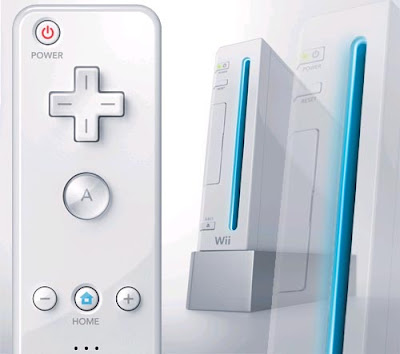


The Wii is still the runaway success of this generation, but Nintendo obviously has the most to lose from this point on. Astonishingly, some Wii first party titles have remained among the top sellers across all platforms for years. ´Mario Kart´ and ´Wii Fit´ sold as much as ´Grand Theft Auto IV´ in 2008 and are among a total of five Wii titles in this year's top ten sellers in the US so far.

As far as a slowdown in hardware sales is concerned, some observers have overstated the case, I believe. Of course, when comparing sales this year to 2008, the numbers have indeed slowed down significantly. The price cut is the best proof of that. Companies only ever cut the price when the product is not selling. That was true of the Xbox360 and PS3 as well as the Wii. But NPD analyst Anita Frazier recently pointed out how well the Wii is doing still.


While there has been a lot of focus on Wii sales as compared to last year, the system was still the best-selling console system by a margin of 54 per cent. (...)

At this same point in the PS2 lifecycle, the PS2 was down in unit sales by 23 per cent over the previous year, but as history has shown, it continues to have a great deal of life left in it. So focusing on a comparison to Wii's stellar 2008 performance masks the reality of just how well this system is selling.


So do not worry. Nintendo is still raking in the money with both the hardware and first party software. But how well are third parties doing on the Wii? We had this discussion in January 2008 and again in August as well as in October of that year. In the last post, I noted the following:


A grand economic success of titles like ´The Conduit´, ´House of the Dead: Overkill´ or ´MadWorld´ will surely become examples the entire industry will follow. On the other hand, if these titles sell poorly, the Wii will get less and less mature titles and will become a casual console.


By now, it is quite clear that the latter scenario came true. All titles mentioned sold poorly or even abysmal, despite two of them being great games. So the Wii has failed as a platform for mature games by third parties, it must be said. And it is highly unlikely that this will change. In fact, I believe that Capcom may be regretting moving ´Monster Hunter Tri´ from a PS3 exclusive over to the Wii. The game is selling very well in Japan, but international sales are likely to disappoint as was the case with the games mentioned above. Of course, the Wii has become the console of choice for survival horror and Resident Evil fans alone cannot afford to be without ´Resident Evil 4 Wii Edition´, ´Resident Evil: The Umbrella Chronicles´ and ´Resident Evil: The Darkside Chronicles´. But we are still waiting for a decent shooter and a few other genres, notably RPGs, are also understaffed.

Nintendo is even openly criticised by partners like Electronic Arts. Their CEO John Riccitiello has expressed disappointment about poor sales on the Wii platform and noted some problems Nintendo may be facing in the near future.


One, it's a very compelling platform. Two, third-parties can do a lot better on the platform with the right support from Nintendo. They've always been first-party-centric, and they're learning how to be third-party supportive.

My belief is the first platform to reach $149 is going to inherit much of that [PlayStation2] business. (...) The Wii is not gone. But if they maintain $199 and don't innovate, they're going to have a hard time competing with what's already been announced from Microsoft and Sony.


According to Games Industry, Riccitiello made the following remarks in the company's recent earnings call.


To be honest with you, I think the Wii platform has been a little weaker than we had certainly anticipated. And there is no lack of frustration to be doing that at precisely the time where we have the strongest third-party share. (...)

I think driving revenues up on that platform from where we already are, which is up substantially from where we were a year ago, we are reaching out to Nintendo to find ways to partner to push third-party software harder.

Wii is where we are missing it and so I really do think that the opportunity exists to find different ways to partner with first party in this case to sort of help establish in the minds of the consumer legitimacy of some of these other brands when they are going out multiplatform because very, very few multiplatform titles are succeeding on the Wii. (...)

I would point out, by the way, the 50 million number of course includes Asia or Japan and I don’t think any of the Western companies are likely to participate much at all on the Wii platform in Japan, so the addressable market we see is just a little bit below 40 million but that is still an important opportunity.


In the transcript of the earnings call, more background is provided.


Fiscal Year To Date, EA is the #1 independent publisher on the Wii with share of 21% in North America and we estimate 14% in Europe – up 8 and 10 points, respectively. Our non-GAAP Wii revenue is up 50% year-over-year. While we have hit our share goal for the Wii business, revenue is well below expectations due to underperformance of the Wii platform.


The problem is clear. Being such a strong first party publisher, Nintendo itself made most of the money off of the Wii platform. Although it is the clear market leader and will likely remain at the top, Nintendo failed to mobilise third parties. So whatever successor Iwata and Miyamoto are planning, it will suffer from the very same problem.

In fact, a successor to the Wii will in itself be a grand challenge. Normally, companies innovate with one generation and consolidate with the next. At least, this is the way Nintendo has done it so far. With the Wii lagging so clearly behind the competition in terms of hardware power and the competition ramping up their own motion control systems, which will no doubt be perceived as more advanced when they hit the market, Nintendo cannot afford to consolidate.

The next console, which may be called ´Zii´, had better be as innovative as the Wii. And in my mind, the only way this can be achieved is by some kind of 3D visuals. There has been plenty of evidence to support this and Sony is already ramping up their efforts in this department.


Yet Sony has very little money to invest. The corporation has come under intense pressure this year to reduce the price of their PlayStation3. They finally did and sales soared. However, this means that Sony is still subsidizing each unit sold, according to market intelligence firm iSuppli.


Based on a dissection and analysis of the console, iSuppli has determined that the 120Gbyte Hard Disk Drive (HDD) version new PlayStation 3, released in September, carries a combined Bill of Materials (BOM) and manufacturing/test cost of $336.27. At a newly reduced retail price of $299, the latest version of the PlayStation 3 comes closer to breaking even than any previous version of the product.


Losing money on each hardware unit sold some three years after the product launch is probably unprecedented in this industry and it is, naturally, the economics of the madhouse. At the very least, it is a huge gamble for Sony. They are finally selling decent amounts. But will those sales figures be enough to convince third parties to commit to more exclusives and thus spur on sales even more?

Notable PS3 third party exclusives are: ´Agent´, ´Final Fantasy XIII Versus´ and ´Final Fantasy XIV Online´, ´Heavenly Sword´, ´Last Guardian´, ´Metal Gear Solid 4´, ´Ninja Gaiden Sigma´ series, ´Ridge Racer 7´ and ´Valkyria Chronicles´. This list is clearly dominated by titles which do well in Japan, but may not prove to be blockbusters in Europe or North America. As a counterweight to this, first and second party titles appear to come predominantly from the company's North American and European branches, SCEA and SCEE. Yet with the majority of PS3 third party titles also available on Xbox360, which is significantly cheaper and boasts a more impressive list of third party exclusives, the Xbox360 still looks like the better proposition.

I believe that motion control will be the deciding factor. If the PS3's ´Sphere´ can outshine the 360's ´Project Natal´, Sony has a chance to come second this generation. The launch portfolio and the marketing will decide which system buyers will see as the technological successor to the Wii. ´Sphere´ has the advantage that the technology has been around and has been tested by Sony for almost ten years. At the ECTS 2001 in London (before the launch of ´Eye Toy´ for the PS2), I played a technological predecessor to ´Sphere´. Colored swords and maces were simulated on-screen and in real-time. This was only ever used in marginal games like ´Eye Toy Hero´. But Sony sure has perfected this technology since. It is a slim chance (pun intended), but 2010 could yet become the year of the PS3.

It could all go wrong, however. Let us not forget that IBM discontinued the Cell chip line, after Sony had talked the chip up to be the ultimate CPU, soon to revolutionise not just personal and super computers but also household electronics. This decision has ramifications for a possible PS3 successor, or rather betrays Sony's future plans (because if Sony had planned for a Cell-based PS4, IBM would not have discontinued the chip line). It seems highly unlikely that such a device would have a Cell-based chip, which in turn spells a high research and development budget. Quite obviously, this is money Sony does not have and/or is unwilling to invest. So, the worst case scenario is Sony no longer planning a PlayStation4. As unlikely as this might be, it is certainly a possibility.


It seems that there is next to no news regarding the Xbox360 at this point in time. And this is good. Unlike with the Wii and PS3, no third party is complaining about the platform, no analyst is heralding an imminent doom and most gamers seem content, too. Everyone is happy with the console's performance, it seems. And there is every reason to be.

Third party support is arguably the best among the three. Exclusive games of note include ´Alan Wake´, ´Lost Odyssey´, ´Blue Dragon´, ´GTA IV DLC´, ´Dead Rising´, ´Beautiful Katamari´, ´Lost Planet´ (timed), ´Gears of War´ and ´Mass Effect´ series, ´Too Human´, ´Ninety-Nine Nights´ and ´Prey´ series, ´Splinter Cell: Conviction´, ´Ridge Racer 6´, ´Quake 4´, ´Left 4 Dead´ series and ´Dead or Alive 4´. Alongside Microsoft's own efforts concentrating heavily on family friendly gaming (albeit this is more evident in their marketing than in the actual software output), I believe the 360's portfolio to be the most balanced overall, particularly as traditional gaming (without motion control) is concerned.

Of course, the console business has been an extremely costly endeavour for Microsoft, leaving nothing but a bill of around six billion US-Dollar by 2007. And while the division (which also includes the Zune player) is at least making money, their operating income declined 66 percent from 2008. As is the case with Sony, Microsoft still appears to be subsidizing most SKUs, since they shipped more consoles in 2009 than in 2008, while operating income fell.


Xbox 360 platform and PC game revenue decreased $161 million or 3%, primarily as a result of decreased revenue per Xbox 360 console due to price reductions during the past 12 months, partially offset by increased Xbox 360 console sales and increased Xbox Live revenue. We shipped 11.2 million Xbox 360 consoles during fiscal year 2009, compared with 8.7 million Xbox 360 consoles during fiscal year 2008. Foreign currency exchange rates accounted for a $74 million or one percentage point decrease in revenue.


It is fair to say that Microsoft bought its way into the home console business. But considering that the company has the financial stamina to continue investing in the project, this may yet turn out to be a worthwhile enterprise. I have always said that if Microsoft had known the full extent of the necessary investment, they would obviously never have entered the market. But now that they are in and seeing some success, they are here to stay.

They are still clearly in second place and ´Call of Duty: Modern Warfare 2´ selling more than double on Xbox360 than on the PS3 in the US underlines their dominance in their home market. While the console will probably never see sustained growth in Japan, it is doing very well in Europe. And a strong position in two out of three territories, as well as the number two worldwide is not a bad place to be.

Just like I noted above, Microsoft's fortune will greatly depend on the public perception of ´Project Natal´ as opposed to Sony's ´Sphere´. I see the Wii as unbeatabale in this generation, just like the analyst cited above. But Nintendo will lose reputation to either of the competing motion control technologies. And ´Project Natal´ has some very compelling features. No controller at all is a great proposition for everyone who does not want videogaming invading his living room and cluttering up the space. The downside of it is that it is not easily suited for all kinds of games. I do not see any chance of playing a shooter with ease. And even for racing games, I doubt that it will deliver the precision needed. That will not be too much of a disadvantage if a game like ´Milo´ can bring a new level of artificial intelligence and interaction to gamers. If done right, this game alone has the power to keep Microsoft ahead of Sony for the remainder of this generation.

Sources: see above
Thanks to:
Joystiq, Joystiq, Joystiq

Friday, November 20, 2009

IBM discontinues Cell chip line, PS4 affected


IBM is discontinuing the Cell chip line of products. A successor to the current PowerXCell-8i chip will not be brought to market, the company's Vice President of Deep Computing, David Turek, told the German IT news site Heise.

Turek did note that the Cell design was not dead and would in parts be implemented across IBM's various other chip designs. The future, though, belongs to hybrid designs and heterogenous multiprocessing, Turek said.

The ramifications for a possible successor to the PlayStation3, which contains the Cell chip, could be significant. Its architecture can no longer be Cell-based, which would entail the following: Firstly, backwards compatibility to the PS3 would no longer be possible on a hardware basis. It would have to be emulated, which is always the worse option. And, secondly, Sony could no longer look forward to a relatively cheap research and development budget for the PS4.


Over the past two years, various reports have sprung up that Sony was very much considering a Cell-based chip for the PS4.


The plan to use variants of Cell in future PlayStation iterations was always in place, explains [Impress Watch technology writer Hiroshige Goto], which is why Sony invested so heavily in the chipset. However, while the use of the Cell in the PS4 may seem like Sony just sticking with its original plan, the real reason could be that the company in its current form doesn't have the reserves to create another chipset and build all the requisite development tools above it.

Going with Cell has the benefits of keeping production costs down for the PS4 and also allowing cutting game development costs due to a consistent architecture. Sony would also be able to include a smaller chip size from the start, potentially reducing the system's retail price.


Of course, IBM would not discontinue a chip line if Sony was still interested in it. So we can safely assume that Sony changed its mind. But why? A Cell-based solution would have had many advantages for the company, as noted above. One possible explanation would be that Sony has cancelled its plans for another PlayStation and will be leaving the home console market. Analysts discussed this option years ago.

And while the slimmer version and price cut have helped the console gain some market share, the price cut is costing Sony dearly. The Washington Post reported that Sony is further away from profitability than previously thought.


Sony (...) pushed back its target for an operating profit margin of 5 percent to March 2013. Chief Executive Howard Stringer had originally set the target in 2005 for the financial year to March 2008, but plans for recovery were waylaid by the economic slowdown.


In my mind, withdrawing from the home console market altogether is a real possibility. And IBM discontinuing the Cell chip line may be the first indicator of such a move.

EDIT I welcome all people from NeoGAF to read up on the exclusive stories I broke. I understand that some of you people may be suspicious of this blog's title but I can assure you that I am an impartial games journalist (have been for ten years) and work for a German television show focussing on games and technology.

It should not be a taboo to discuss the possibility of Sony withdrawing from the home console market. Given their financial status and their CEO's attitude, it is not out of the question. And with IBM discontinuing the Cell chip, Sony would have to invest a huge research and development budget into a new console. I welcome reasonable discussion and invite you to share your thoughts in the comments section.

EDIT Sony apparently considered the Intel Larrabee for the PlayStation4, a CPU / GPU hybrid, according to Japanese site PC Watch (translated by Joystiq). The plans have likely been abandoned since, as the project has been downgraded and delayed by Intel. An unnamed source within Sony Computer Entertainment is quoted as saying that the chip may be used in future generations: "Larrabee can help us to plan PS5 and PS6, but it cannot make it into PS4."


Sources: Heise (German), IGN, Washington Post
Thanks to: Joystiq

Friday, August 28, 2009

Why the Wii needs a price cut fast


Smooth ride up until now

The Wii needs a price cut fast and here is why. Up until now, Nintendo has had a very smooth ride this generation. They started out with the lowest price proposition by far and the most revolutionary, intuitive and immersive control scheme and biggest fun factor to top it all off. At least, that is what more than 50 million people around the globe think.

Sure, the white box can only deliver 480p as its top resolution. And the rest of its hardware is equally modest, making sure that most graphics-intensive games by third parties get either a toned down version, a completely unique adaptation (some examples are ´Overlord: Dark Legend´, ´Dead Space Extraction´, ´Resident Evil: Darkside Chronicles´) or pass the console by completely. But, all the unquestionable Nintendo goodness aside (´Metroid Prime 3´, ´Zelda: Twilight Princess´, ´Super Mario Galaxy´), hardcore gamers got a few third party gems, too. Particularly in the survival horror genre, Wii boasts more titles than any other console ever offered, I reckon (I have counted 20 already) and some are absolute must-haves. So, Wii sold to new gamers as well as to veterans, who probably own more than one console anyway. And it has been smooth sailing for Nintendo up until now, with Wii selling about as many units as the two competitors put together.

Microsoft seemed to endlessly tweak the SKU variety of their Xbox360 as well as their price. And, leaving the elusive fun factor aside, the 360 has been the best value proposition by far for a long time. But even this circumstance could not change the reality that is each companies' respective market share. Sure, Nintendo has hit dry spells in the past, with other consoles selling more units for a few months in one territory or another. But these dips were usually related to a lighter release calendar. When bigger titles drew nearer, sales rose again.

Software no longer moves hardware

Not anymore, it seems. The news of Wii hardware sales taking a 30 percent dip in the US last month despite the release of ´Wii Sports Resort´ should have Nintendo worried. Very worried, in my opinion. Because the title should move hardware as much as any other Nintendo game. A gigantic marketing campaign in the US should have made sure that the consumers were aware of the release. The fact that it did not move a significant amount of hardware can only really mean one thing: everyone that wanted to buy a Wii in the said territory has bought one. If a title like ´Wii Sports Resort´ cannot invigorate sales, then no title can (at least not of Nintendo's casual variety, which undoubtedly was the backbone of the console's success). The only option available to Nintendo of America may be a price drop. This would surely convince more people to hop on the Wii bandwagon. But software no longer seems to move hardware.

Upcoming games to disappoint

First, a little reality check: Am I being unfair here? Of course, all the other consoles sold badly in July. Well, yes. But the PS3 only took a 25 percent dip and the 360 went down a mere 15 points, only half of the Wii's loss. That is a significant difference. But what about other territories? In Japan, year-to-date year-over-year changes show big losses for the console. Europe may be the Wii's last resort (this is actually a double pun, if you remember an obscure PC game from 1996) but a worldwide downward trend is becoming clearer and clearer, it seems.

But what about other upcoming titles, particularly the third party portfolio, which is still a sore spot for Wii owners? Surely, exclusive titles like ´Monster Hunter Tri´ or ´Red Steel 2´ will sell hardware to the traditional crowd, if the more casual titles now fail to shift consoles. Unfortunately, I have it on good authority that both of these highly anticipated games will not deliver. They may look nice, but both titles are being rushed out of the door. Wii owners will have a few good survival horror titles to mull over. But there is no shortage of those on the platforms. So a ´Dead Space Extraction´, no matter how good it will be, will not become the killer app that a polished ´Monster Hunter Tri´ could have become.

Price cut the only solution

Especially with the PlayStation3's price drop and sleeker re-design, as well as motion control around the corner for both high definition consoles, Nintendo is coming under intense pressure this generation for the very first time. The only way out seems to be a price cut, preferably to be announced around Tokyo Game Show next month (though Nintendo will not exhibit, as always). I do not see any alternative for Nintendo (and I am not alone with this opinion), if they want to maintain the impressive momentum they have exhibited so far. This is the curse of a runaway success: maintaining it. After all, a boom, in economics, is a highly unstable and volatile state. And if they do not re-position the Wii's price point, Nintendo may soon find out the hard way.

EDIT Looks like I was spot on with my analysis. The following image was published by Kotaku. It may be fake, of course. But both the timing and extent of the price cut would fit perfectly, so I believe it is legit.


Source: Joystiq, Joystiq, Chart Get! Chart Get!
Thanks to: Some German Guy

Monday, July 06, 2009

Sony CEO shrugs off mounting pressure to cut PS3 price


Sony Corp. CEO Howard Stringer has shrugged off Activision's demand to either cut the price of the PlayStation3 or risk losing the Activision portfolio. Stringer spoke to Reuters about the threat issued by Activision CEO Robert A. Kotick:


He likes to make a lot of noise. (...) He's putting pressure on me and I'm putting pressure on him. That's the nature of business.


Reuters then asked Stringer about the logic of not giving in to the demands and cutting the price, to which Stringer mysteriously replied:


I (would) lose money on every PlayStation I make -- how's that for logic.


This statement is an odd one because Sony has lost money on every unit sold from day one and still is, according to Sony CFO Nobuyuki Oneda. Referring to the end of March, Oneda stated that Sony still subsidized each console sold with around $42.

I contacted the author and editor of the article to verify how and why the word ´would´ was added. This is the reply I received.


I think you can use the story without the word "would". It was probably added in the editing process in an attempt to clarify the quote, which was "I lose money on every PlayStation I make -- how's that for logic."


So what did Stringer mean? Was he self-critical of his company's business model of subsidizing consoles? Confronted with the assertion that there is no logic in not cutting the price, did his reply insinuate that there is already no logic in Sony's business model of heavy subsidies? Please discuss.

The pressure on Sony to cut the price is certainly mounting. Only days ago, the CEO of Tecmo Koei, Kenji Matsubara, chimed in on the debate in an interview with CVG:


Whenever I discuss this with Sony reps I always ask them: "Please cut the price", but I don't have a clear view on Sony's situation. Yes, from a publisher's point of view we would welcome a price cut for PS3, and we are waiting, definitely.

It's definitely a way of boosting the PS3 market, but it's Sony's strategy and I don't know their cost structure. Sony introduced cutting-edge technology in the PS3, that's why people in the industry accept that the PS3 cost is so high, but we'd welcome a price cut.


In 2007, Ubisoft CEO Yves Guillemot and Square Enix president Yoichi Wada were the first to criticize Sony's pricing and marketing strategy, respectively.

Sources: Reuters, CVG
Thanks to: idahoblue, Some Guy

Saturday, June 20, 2009

Activision Blizzard threatens to stop PlayStation support


Activision Blizzard, the world's largest third party publisher, has warned that they "might have to stop supporting Sony" as early as next year, the company's CEO Robert A. Kotick told the British daily newspaper The Times.

I'm getting concerned about Sony; the PlayStation 3 is losing a bit of momentum and they don't make it easy for me to support the platform. It's expensive to develop for the console, and the Wii and the Xbox are just selling better. Games generate a better return on invested capital on the Xbox than on the PlayStation. (...)

They [Sony] have to cut the price, because if they don't, the attach rates are likely to slow. If we are being realistic, we might have to stop supporting Sony. (...) When we look at 2010 and 2011, we might want to consider if we support the console — and the PSP [portable] too.


Analysts have already predicted doom and gloom for Sony Computer Entertainment, which is nothing unusual. Analysts do not have to be terribly diplomatic and others have voiced similar criticism concerning the other console manufacturers. But this is not the first time that Sony has been confronted with unusually harsh criticism by third party publishers, which is rare in this industry.

Back in May and September of 2007, respectively, Ubisoft CEO Yves Guillemot demanded a price cut for the console ("They have to decrease the price quite significantly") and Square Enix president Yoichi Wada criticized Sony's marketing efforts ("[The future of the PS3] would be tough if its marketing strategy is not straightened up.")

The future of the PlayStation depends on when Sony will reduce the PS3's price tag. The latest guess by an analyst is August. But I maintain that Sony simply has not got the financial resources to reduce the price until Christmas. Sony CEO Stringer has made it quite clear that he puts profitability above everything else.

The real question is, though, whether Activision Blizzard is merely bluffing or if these unusually harsh comments contain a very real threat. Sure, a number of the publisher's games sold more than a million on the PS3. So the console generates revenue for them. We simply don't know what little profit is left. Kotick revealed some of the additional costs of developing for Sony, noting that Activision Blizzard "paid $500 million to Sony in royalties and other goods last year." Again, such a disclosure is highly unusual. What is Kotick up to? Please share your thoughts in the comments section.

EDIT Videogame analyst Michael Pachter has commented on the story, noting:

Of course Bobby’s bluffing, and good for him. (...) I think Bobby’s obviously interested in Sony selling as many PS3s as they possibly can, and he’s not happy with their penetration so far. I think he favours a price cut, and would rather see one sooner than later.


Sony Computer Entertainment has yet to respond in a meaningful way.

I would also like to remind you of the last big debate about whether the PlayStation3 is dead or dying. Back in December, an analyst's assertion that the PS3 was a "sinking ship" which was "flopping so badly" had sparked a lively debate which I quoted extensively.

EDIT As expected, the news of Activision's threat has sparked a lively debate, which I will attempt to capture here, in the familiar style of guest commentary.


Sony's clearly in a pinch

Is the PS3 really losing momentum? It depends, as usual, on where you're standing. Since the system launched in late 2006, it's clearly been growing in year over year unit sales. In 2008--the system's best year yet--Sony sold over 10 million PS3s worldwide. And while sales have been down for all contenders recently, Sony's sold nearly as many PS3s worldwide as Microsoft has Xbox 360s so far this year. Of course Microsoft still has more than a third as many Xbox 360s in the wild, but since 2008, Sony's slowly (very slowly) been gaining. (...)

That said, Sony's clearly in a pinch. Its game division lost nearly $600 million in 2008, the PS3 consistently lags in NPD's US sales reports, and the system charts the fewest high sales software titles month after month.

If Sony lowers the PS3's price, we've been assuming they'll lose even more money. But if they keep it sky-high, they theoretically stifle sales and by virtue thereof, their growth rate, frustrating publishers, who naturally want to sell to as many customers as possible.
PC World


Stark and somewhat surprising

A stark and somewhat surprising statement. (...) PS3 price cut soon, surely?
Play.tm


Could seriously hurt console sales

That’s pretty serious considering Activision is the largest video game publisher in the world. It probably won’t come to that — I can’t see them not lowering the cost in the next year or so regardless of what Kotick thinks — but if I were Sony I would definitely be a little nervous about this. If this inspires some bravado in EA and they make a similar statement it could seriously hurt console sales.
A+E Interactive


The pressure is on

For its part, Sony, which is mired in third place behind Nintendo and Microsoft in the next-gen game-console wars, keeps saying it won't be pressured into trimming the price of the PS3. But with industry heavyweights like Activision making these types of remarks, it's becoming more and more clear that the pressure is indeed on.
CNET


Ever saw a publisher threaten a platform holder?

In that absolute worst-case scenario, that would mean no Call of Duty for Sony consoles. No Guitar Hero for Sony consoles. No Tony Hawk, either. It probably won't ever come to that, of course, but Kotick's words are still worth noting. After all, when was the last time you ever saw a third-party publisher so openly threaten a major platform holder?
Kotaku


A huge bomb

Activision boss Bobby Kotick has dropped a huge bomb on Sony. (...) While Kotick may sound a bit cocky here, I don't think Sony wants to sit on statements like these. And no one is going to argue about the PS3 needing a price cut either.
Destructoid


Nintendo has issued similar denials

Sony has continued to insist that it will not be pressured into lowering PS3 prices before the 2009 holiday season.

"I think everybody but us would love to see it given away for free," Jack Tretton, president and CEO of Sony Computer Entertainment of America told CNBC. He added that cheapest wasn't always the most successful, but rather, "what you get for your dollar."

It should be noted that Nintendo has issued similar denials regarding a lowered Wii price tag, despite confirmation of a (May) 57 percent year-on-year drop in sales.
TG Daily


What if EA said the same thing?

Now, Kotick's words are just corporate smacktalk (bottom line: Activision still makes money on the platform). But what if a company like EA came forward and said the same thing? No good can come of this for Sony.
Gizmodo


Activision Blizzard needs the numbers Sony delivers

Is it a credible threat? That is hard to say, but the industry has ample evidence of just how ruthless Activision Blizzard has become. (...) By slamming the console maker in public it creates a perception of weakness witih Sony's platforms. Now the developer is in a very good position to bargain for lower licensing fees, help with advertising dollars, or other financial rewards to "stick with" the PS3 and PSP platforms.

It's doubtful Activision Blizzard has lost money by supporting the PS3 and PSP as platforms, and again, the company needs the numbers Sony delivers to meet its goal of having Modern Warfare 2 be the "biggest property launch of all time." What Kotick can do is attack Sony in the press and create a perception of weakness and then exploit it for better terms when releasing these blockbuster titles, and that's what we're seeing here.
Ars Technica


A crazy precedent

Activision is the world's largest third-party publisher, with huge franchises like World of Warcraft, Guitar Hero and, most importantly, Call of Duty under its belt. The loss of even Call of Duty seems to me like it would significantly hurt the PS3. Still, the big question everyone is wondering is if Kotick has enough sway to actually force Sony into a price drop. Maybe Kotick's just blowing steam, but it'd be a crazy precedent for the largest publisher to drop the system entirely.
GameSpy


Cutting prices would be difficult for Sony

Kotick's comments have weight because of the market strength of Activision. The company is the world's largest independent computer games company and has a market value of $16 billion.

Cutting PS3 prices would be difficult for Sony. The company last month reported its first annual loss in 14 years, caused by a strong yen and a sales slump in its consumer electronics business. While the economic downturn hurt sales, Sony also suffered from competitors' lower prices.

As a result, sales in Sony's electronics business fell 17% from the previous fiscal year, and revenue from its game unit fell 18%. While Sony sold more units of the PS3 and PSP, the company saw a drop in software sales.
InformationWeek


PS3 could be Sony's last big console

Could Activision really be considering ditching the PS3? If so, this concept breathes a lot of life into the possibility that the PS3 could be Sony's last big console. Sure, the company would stay afloat if Activision was the only publisher to back away, but that might encourage a lot of publishers to get out of Dodge. Is Sony a sinking ship? (...)

I'm a firm believer in the idea that all three console makers should have a spot on the market. Competition breeds excellence and innovation. Sony cannot disappear, if they do... what would happen to gaming?
Kombo


A total bluff

Sounds like a total bluff — I can’t see Activision pulling support from Sony, but I can see them attempting to influence PS3’s price by publicly threatening to.
Wired


Sources: The Times, VG247
Thanks to: Joystiq