Friday, February 03, 2006

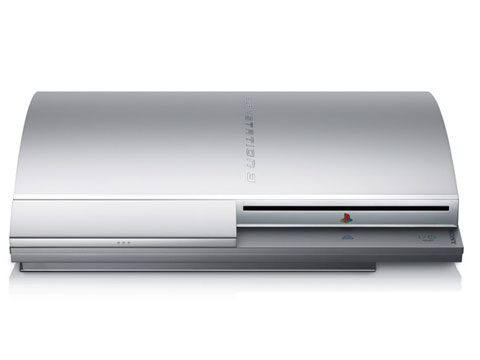
Sony developer slams PS3, part II

Ever wonder how easy it is to break an NDA? 3D artist Josh Robinson, who wrote a gloomy review of the PS3 has been sacked by Sony Online Entertainment and speaks about his experience in an interview with PS3 Week.
Let me first just say, all I really did was write a few paragraphs that gave my opinion on publicly released information. I never actually released any information. After reading my small article the reader is not any more informed about the PS3 than he was before the article. I didn’t reveal any tech info and I didn’t reveal different shipping plans. I’m still in awe at the whole uproar over what amounts to NO information. My life has changed a lot since the article. I was let go at Sony after the article was plopped on the desk of Sony corporate. (...)

I didn’t want to cause any problems at all by writing the article. I had at least two Sony employees read the article before it was even posted. Even a producer at the company read it. We were all in agreement that I was not breaking NDA with what I was saying. We all thought that I may rub a few people the wrong way, but nothing as severe as getting fired. I thought I was pretty fair about the comments I made. Most of the things I said were pretty standard industry facts that everyone is aware of. None of it is new information. (...)

I’ve been doing this for 9 years and I’ve never once even come close to breaking NDA. In my own error, I assumed that it would be OK to give my opinion on what I believed to be public information. Sony has said very publicly that they are shipping in spring. All I said was, "hey I’d not want to miss the next E3 show." I didn’t leak any shipping information or reveal any other intentions. I also talked about some technology that has been released publicly for almost a year. You can go to Gamespot right now and view tech demos showing sub surface scattering, HDR, very high dynamic object counts and so on. It is all available. I didn’t reveal anything. Before the article was posted I passed it to a couple others that also work at Sony who write for Down In Front. No one seemed to worry that I was breaking NDA. The bigger concern seemed to be my awful grammar. After it had been posted one of the producers read it and was also OK with it. He thought I could push a button or two with a few comments but nothing even close to what ultimately happened.

Did I knowingly break NDA? I absolutely did not. I would never do that and I would never want to hurt Sony Online. Did I dance in the grey area by even opening my mouth? Yes I did and I was fired for it. So I guess the new rule for me is, don’t ever say anything at all about anything. Ever...ever.
Obviously, you all know what I posted this in regard to. Admittedly, Josh was fired mainly because his comments were hardly complimentary. But while fakers like Inc and Rebus seem to generate more positive hype, they also divulge much more sensitive information regarding other company´s corporate affairs: when the second revolutionary aspect will be revealed, their current project´s tentative name, as well as plenty of storyline and gameplay details. They even hint at the publisher they claim to have a deal with.

Of course, their claim is that they were authorised to post some of the information. I have spent enough time commenting on how ridiculous that claim is. Also, they admitted that they were speculating on when new info on the console would be revealed. That is just what Josh did, albeit in a more negative context. But the context doesnt matter here, at all. Legally, you cannot fire someone on the grounds of badmouthing his employer´s products. At least, that was not the case here. Josh was fired solely on the grounds of breaking his NDA. So, legally, these cases are directly comparable. Consider that before believing anyone who claims to post insider information.

Source: Down in Front, PS3 Week
Thanks to: Anonym

Patent suggests voice recognition for Revolution


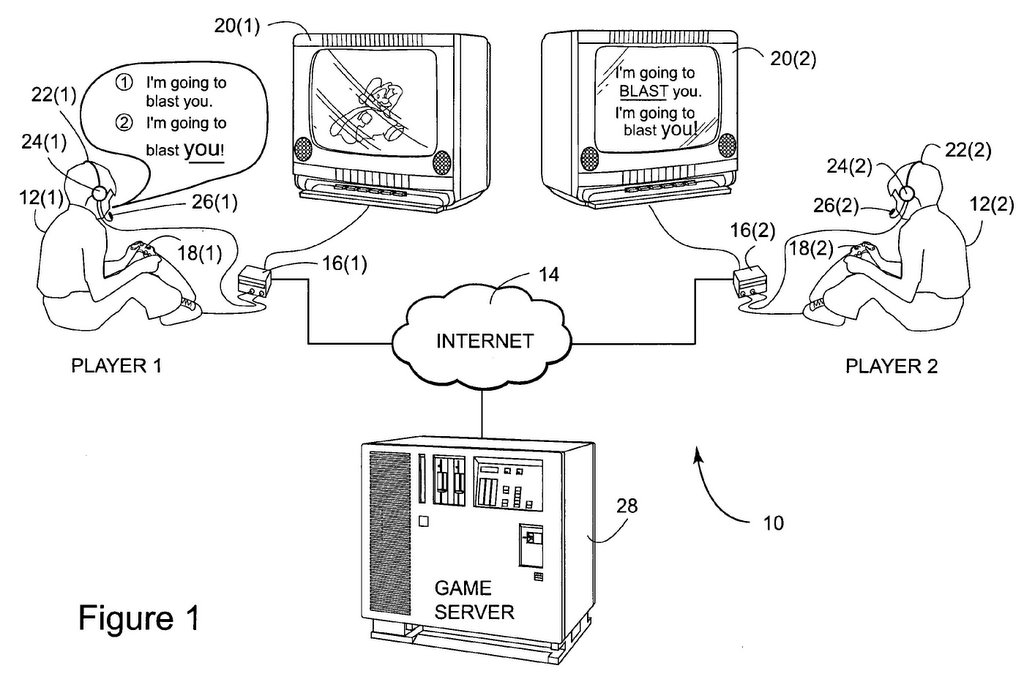
A new patent has been dug up, entitled ´Voice-to-text chat conversion for remote video game play´. The abstract reads:
A multi-player networked video game playing system including for example video game consoles analyzes speech to vary the font size and/or color of associated text displayed to other users. If the amplitude of the voice is high, the text displayed to other users is displayed in a larger than normal font. If the voice sounds stressed or is aggressive words are used, the text displayed to other users is displayed using a special font such as red color. Other analysis may be performed on the speech in context to vary the font size, color, font type and/or other display attributes.
This would require flawless speech recognition, if implemented properly. On top of that, there would be some kind of emotion recognition, registering when the words are said in an angry, timid or kind tone of voice and displaying them accordingly. Of course, the question is whether this technology will be used in the Revolution or the handhelds. The detailed description leaves this question unanswered.
In the example shown, video game playing equipment 16 may comprise for example a home video game platform such as a NINTENDO GAMECUBE system connected to a handheld game controller 18 and a display device 20 such as a home color television set. In other examples, game playing equipment 16 could comprise a handheld networked video game platform such as a NINTENDO DS or GAMEBOY ADVANCE, a personal computer including a monitor and appropriate input device(s), a cellular telephone, a personal digital assistant, or any other electronic or other appliance.
I think there are hints in the text that this system could be used for both the Revolution and DS consoles. The use of a server is mentioned as optional, depending on whether the console is able to convert the speech itself.
A game server 28 may optionally be provided to coordinate game play. For example, in the case of a complex multiplayer role playing game having tens or even hundreds of players 12 who can play simultaneously, a game server 28 may be used to keep track of the master game playing database and to provide updates to each instance of game playing equipment 16. In other game playing contexts, a game server 28 may not be necessary with all coordination being provided directly between the various instances of game playing equipment 16. (...) FIG. 2 shows an example illustrative non-limiting implementation of a speech-to-text converter 50 that may be used by example system 10--either in or with game playing equipment 16, within game server 28 or both.
In my opinion, a server may be needed for the DS, while the Revolution could most likely handle the conversion itself. It certainly seems as if this technology could be used on both systems and may even be hinting at the connectivity features between the two.

Source: US Patent and Trademark Office
Thanks to: BadNor, Heber

Wednesday, February 01, 2006

´Cisco´ interested in buying Nintendo?


On News.com staff writer Marguerite Reardon has written an analysis piece that explores the possibility of internet giant Cisco Systems, Inc. buying Nintendo. Here´s what she writes:
Already Cisco has announced plans to spend $6.9 billion on cable set-top maker Scientific-Atlanta. When the deal closes in the next couple of months, it will be the third significant acquisition Silicon Valley-based Cisco has made in the consumer realm. The question now is, who's next? (...)

Another possible acquisition candidate for Cisco is Nintendo, the No. 3 game console maker in the U.S. A stretch? Not really. Microsoft, which is emerging as a key competitor to Cisco in the home entertainment market, is already in this market with the Xbox 360. Gaming has already proved to be a strong application for broadband, so it makes sense that Cisco would want to own a game device to help drive more traffic on its network. With its popular GameBoy product, Nintendo would also provide Cisco an entree into the mobile-handheld market.
Other potential candidates include TiVo, Sling Media and Ruckus Wireless. If Cisco really do have their eye on Nintendo, they are unlikely to make a move soon. Murray Arenson, a senior analyst at Ferris Baker Watts, is quoted in the same article:
"Cisco will go slowly in digesting Scientific-Atlanta. There are still a lot of hanging question marks to answer before they go out and acquire anything else in this market."
Also, a Nintendo takeover would be no easy feat. I cannot find any reliable info on the total value of the company. Estimates on various forums range from thirty to forty billion US dollars. Either way, they seem to be well prepared. In June 2003, Nintendo repurchased almost 8 million of their own shares. Late last year, they bought another 2 million. Such moves are commonly seen as protecting themselves against possible takeovers.

When Bill Gates expressed his continued interest in buying Nintendo in the summer of 2004, Games Industry reaffirmed that the majority of shares are held by former president Hiroshi Yamauchi. They also called Nintendo ´the most profitable business in the games industry´.

Source: News.com, IGN, AdvancedMN, Games Industry
Image source: Cisco
Thanks to: Gamespot