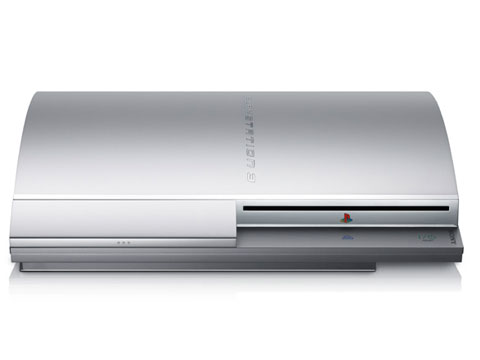
Sony has acknowledged the issue of technical problems with PlayStation3 consoles at the Tokyo Game Show, which seem to have been exaggerated by some commentators, according to
MarketWatch:
"We heard that some trouble happened at TGS but haven't identified what happened. Therefore, we don't know exactly if it really happened or not and what the cause was," said a spokesman for Sony Computer Entertainment Inc.
Asked if Sony was investigating the issue, he said: "I don't think so." He declined to comment when asked if the PS3s on exhibit at the Tokyo Game Show had to be reset often.
The article further quotes analyst David Gibson from Australian financial conglomerate Macquarie:
"We have heard that at the TGS PS3s had stability problems and had to be reset often. While the reason for this is unknown we suspect it may be due to overheating as a result of enclosing the units and the high temperatures at the venue. We understand that Sony is investigating the issue and has not determined the cause as yet," Gibson wrote.
During the Japanese trade show, a number of sites had posted pictures of PS3 units having to be fanned. There were also some reports of consoles crashing.
Kotaku reported:
1080p and 60 frames per second don't mean squat when you're rendering a blank screen. We've seen a couple of kiosks and machines go down, but can somewhat safely assume this is just software related and not an issue with the PlayStation 3 machines themselves.
I have heard numerous first-hand accounts of PS3 games running in decent resolution, but exhibiting ridiculously low frame rates.
In other PS3 news,
Sony Computer Entertainment Inc. has revealed the PS3 controller´s new name, which will be
´Sixaxis´, and the
´PS3mote´, if you will. It´s a typical multimedia remote. Picture comes courtesy of
Kotaku:


The big question is whether the problems at TGS were caused by hardware or software. Kotaku believed the problems with Ridge Racer 7 to be down to programming. While these guys are far more knowledgable than I am in these matters, I don´t see consoles stalling and particularly the low framerate issues to be a software problem alone. However, the main reason for the former must have been the casing, causing the units to overheat. So these problems do seem to be far less serious than some expected.
Analyst David Gibson believes that these issues, while responsible for a short-term dent in Sony´s shares, do not convince him to retract from his
´outperform´ rating on the company´s stock, though. So, again, the issue seems to have been exaggerated by some punters and there appears to be no danger of a further delay to the PS3 launches as they stand.
EDIT A number of news media have picked up on this story. And some analysts are taking the reports of defective PS3 units more serious than I did. Sony shares lost a staggering 2,75% yesterday.
Even more seriously, investment firm Goldman Sachs lowered Sony's stock rating from ´buy´ to ´neutral´. I contacted them about the matter. I will post their press release promptly, as it is coming in.
Further, the Associated Press reports:
The PlayStation 3 will hit stores in Japan on Nov. 11 and in the United States on Nov. 17. In Europe, they won't go on sale until March, four months later than planned. (...)
Sony spokeswoman Nanako Kato said any problems at the Tokyo Game Show, where Sony, Microsoft and Nintendo showed off rival offerings under the same roof, were likely caused by one-of-a-kind temperature irregularities.
About 200 PlayStation 3 units were clustered together in close proximity and housed in kiosks that concentrated the heat generated by their processors and provided poor ventilation, Kato said. Overheating under such circumstances is a common affliction at trade shows, afflicting not just Sony products but those of its competitors, she said.
At the same time, Nintendo raised its profit forecast by more than 20%, according to Reuters. This is based on strong DS sales, as well as a relatively weak Yen.
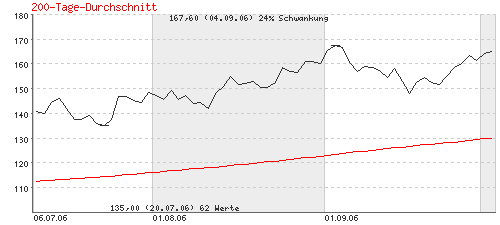
Here are charts showing both shares, as traded at the Frankfurt stock exchange, over a three-month period. The red graph shows you the underlying trend, based on the past 200 days.
Sony Corp.
 Source: Kreissparkasse Köln
Nintendo Co. Ltd.
 Source: Kreissparkasse Köln
This is grave news for Sony, indeed. Such a significant drop in share prices wiped hundreds of millions in stock market value off of the company. In fact, taking Peter White´s May 2005 estimate of Sony Corp.´s value at 36 billion US Dollars as the basis, 2,75% of that almost amounts to one billion US Dollars.
I do have to point out here that I have received only very little formal training in economics, though. Good enough, however, to know that Goldman Sachs is one of the most reputable investment companies. Their rating will undoubtedly escalate the situation further.
EDIT The news just keep rolling in. That´s why I am going to give these edits some structure, in the familiar style of guest commentary.
Sony Shares Drop on PS3 TGS Issues
SCEA calls reports "unsubstantiated."
David Karraker, senior director of corporate communications with SCEA, responded to Next-Gen's inquiry regarding the TGS overheating accusations in Gibson's aforementioned report.
He called Gibson's comments "unsubstantiated" and that "comments related to the alleged failure of PS3 units at TGS are also not attributed to a source."
Karraker offered up SCEA's official defense of the PS3's TGS performance to Next-Gen:
* Despite the report from Macquarie Securities implying that they had heard of reports of PS3's needing to be rebooted at TGS, SCEI are not aware of any instances of this occurring at TGS, nor have we received any reports from third parties to such effect.
* On the Press Day on Friday, and throughout the weekend the PlayStation stand was inundated by specialist gaming media, the majority of whom would have noticed if there had been a general problem with console overheating.
* The environmental conditions at TGS conspire to test any electrical item. In the case of PS3, the combination of pre-production software, running on pre-production debug units, enclosed in demonstration units without ventilation, and surrounded by so many eager fans that on Saturday and Sunday it was almost impossible to move, are bound to prove a challenge.
* If indeed, there was the occasional unit that needed rebooting, it was due solely to the adverse environmental conditions within the Hall and not to any more general problem with PS3.
* PS3 does not suffer from an overheating problem.
Next-Gen
PS3 Overheating Issues
Could the 360 problem become a general next-generation issue...
The three-red-light issue faced by Microsoft with the Xbox 360 may not be the only next-generation issue, if a report on BusinessWeek is led to be believed. Citing a recent share drop in Sony Corporation to concerns over the PS3 stability at the recent Tokyo Game Show, it appears that the PS3 will suffer from the scourge of the next-generation, yes the dreaded overheating issue.
TVG
Playstation 3 "gets too hot"
Overheating is normal at trade shows, afflicting not just Sony products but those of its competitors. But the markets took Gibson's word and have downgraded Sony from a 'buy' to 'hold' rating so share prices fell.
The Inquirer
PS3 overheating claim rattles investors
PS3 is expected to contain some serious cooling technology. Even Microsoft's Xbox 360 needs a liquid cooling system to prevent the console from overheating, as revealed by a recent attempt to convert the console into a laptop.
Confirmation, of sorts, comes via PS3M magazine in the UK, recently given a demo of the machine. Staffers claim the console is not only very quiet but also very heavy, factors which point to some aggressive, fan-less cooling - not to mention a hefty in-box power transformer.
Unlike the Tokyo demo units, the PS3M machine wasn't sealed in, allowing plenty of space for the heat to escape. Of course, none of these consoles may be consumer-ready equipment, even though Sony is now believed to be punching out PS3s as fast as it can.
Reg Hardware
Sony Shares Fall on Playstation Concerns
The problems come in the midst of Sony's widely publicized turnaround effort under its first foreign chief executive Howard Stringer.
It has been hit with mounting extra costs after some 7 million of its laptop batteries have been recalled on fears they could catch fire.
Desperately trying to catch up to Apple Computer Inc.'s iPod in portable music players, Sony said last month it was delaying the Japanese release of its new digital Walkman by a week until Sept. 23 because of a malfunction of an unspecified part.
It is also fighting to make a comeback in flat-panel TVs after falling badly behind Samsung Electronics Co. of South Korea and other rivals.
Sony shares have plunged over 20 percent since April, before the company's battery recall woes. At the start of the year, shares were at 4,730 yen. (...)
Sony, based in Tokyo, recorded a 32.3 billion yen ($278 million), profit during the April-June quarter on the back of strong sales of flat-panel TVs and digital cameras. That was a big improvement from the 7.3 billion yen loss posted the same period last year.
Washington Post
Sony stock slides 2.75 percent on PS3 concerns
Analysts downgrade electronic giant's stock following reports of PS3 malfunctions at TGS and "disappointing" PSP sales.
The stock drop came after two major analysts downgraded Sony's stock on concerns about its gaming division, Sony Computer Entertainment. "We have adopted a cautious view of the impact of the [Sony] game business on the electronics business this term,'' Goldman Sachs analyst Yuji Fujimori told Bloomberg. Fujimori downgraded Sony's rating from "buy" to "neutral" citing "confusion over the release of PlayStation 3 and concerns [about] disappointing sales of [the] PlayStation Portable," according to the Associated Press. (...)
The downgrades come at a bad time for Sony, which is already coping with a massive recall of laptop batteries it manufactured. On Friday, Dell announced that it was increasing the recall of Sony batteries used in its systems from 4.1 million units to 4.2 million units.
On the game front, the company recently had to delay the PS3's European launch to March 2007 and cut day-one inventory of the console to 100,000 units in Japan and 400,000 units in North America. The company says it will still ship 2 million to 2.4 million PS3s by the end of the year.
GameSpot
Nintendo Shares Jump to 6-Year High on Profit Outlook
Nintendo's market share will probably ``turn up in the next cycle, assisted by the success of the DS portable game console, which the company released ahead of the Wii platform, as well as lower prices compared with competing products, active third-party game developer activity, and the postponement of the PS3's debut in Europe,'' Atsuko Kaneko, an analyst at UBS Securities Japan Ltd., wrote in a note to clients dated yesterday. (...)
Nintendo shares have soared 83 percent in the past 12 months, on better-than-expected sales of DS players and rising expectations the Wii console will lure new users to video games.
Bloomberg
Nintendo ups forecast on strong DS hand-held sales
Nintendo has seen red-hot demand for the DS and smaller DS Lite players and software with its innovative hit games like "Brain Training for Adults" and "Nintendogs" as its strategy to broaden the game-playing population to women and senior citizens by offering easy-to-play games paid off.
"We had expected better earnings than the company had forecast for the first half, but it was surprising to see how much it raised its full-year forecast, especially the sales outlook," Nomura Securities senior analyst Yuta Sakurai said.
Nintendo, which trails its rivals going into this holiday season's console war but is the only of the three to say it will turn a profit on its machines from the start, has won praise for its gutsy and contrarian tactics as it battles for ground in the $30 billion video game market.
"There will be so many people who want the console that it will be almost impossible to actually get them at the beginning," Nomura's Sakurai said.
Reuters
PS3 delay could harm publishers, notes analyst
The PAL delay of the PlayStation 3 could hurt revenues for publishers hoping to have taken advantage of a worldwide pre-Christmas launch of the console, with a potential 500,000 European gamers no longer viable consumers.
That's the opinion of UBS Investment Research analyst Michael Wallace, who also noted that the situation may prompt some publishers to delay the launch of their titles to take advantage of a larger market when the PS3 launches in March.
Wallace had expected Europe to receive 500,000 console units by Christmas, and noted that large publishers such as Activision may suffer from building their Q4 targets around the launch of the PlayStation 3.
Publishers that have hedged their bets with titles across multiple formats, including Nintendo's Wii, had a better chance of making up losses, said Wallace.
Games Industry

EDIT I can now exclusively post Goldman Sachs´ justification for reducing the rating on Sony Corp. shares from ´buy´ to ´neutral´:
What happened
We cut full-term estimates and downgrade Sony to Neutral. Although we
think PS3’s struggles are already priced in, we see heavy upside resistance
near term as: (1) PS3 disruption and PSP’s heavy going may have a larger-than-
expected impact on the electronics business, (2) if large losses in the
game business continue next term, market expectations of sustainable
profits there may fall back further, and (3) business environment for the
electronics business, including TV, is becoming increasingly severe in 2H.
Since we attached a Buy rating the stock has fallen 17% (versus – 5.8% for
TOPIX); over the past 12 months it has risen 26.8% (versus +12.8% TOPIX).
Current view
With the stock apparently having priced in PS3’s uphill battle, it can, as we
have suggested, be considered undervalued in terms of sustainable profit
levels. However, we expect protracted upside resistance in view of (1)
cloudiness regarding the electronics business’s earnings environment in
the 2H, including intensifying TV price competition, after prospects for
near-term upside through the 2Q (for earnings forecast details see page 3),
(2) our belief that it will be some time before earnings improvement in the
game business can be discounted (we anticipate further losses next term).
Our zero-growth DCF model indicates that the current share price
discounts operating profits of around ¥270 bn (net profits of around ¥230
bn). With projected headline profits in the electronics business this term
(before eliminating restructuring and battery-recall costs) of ¥246 bn (OPM
of 4.5%), and projected operating profits in the motion picture and
financial services businesses of ¥95 bn, that implies that the stock price
discounts perpetual losses in the game business of ¥70 bn. In present
circumstances that view of the game business may be inevitable.
Using the above-noted headline profits and factoring in our estimate for FY2007
game business losses (of ¥89 bn) gives per-share theoretical value of
¥4,500 (downside of 4.9%), and theoretical per-share value of ¥5,800
(22.6% upside) if we assume profits/losses in the game business of zero.
Our 12-month target price is ¥5,150 (from ¥5,600). Risks include a halt in
the improvement in electronics earnings due to sharp yen appreciation or
intensified price competition on LCD TVs.
Sources: MarketWatch, Kotaku, Sony Computer Entertainment Inc., Kotaku, Associated Press, Reuters
Thanks to: HUGGINA101, Joystiq, MCV